Hawaii Island Carica Papaya
Genetics, Flavor, and Nutritional Profile
Keauhou-Kona, Hawaiʻi — ʻĀina Pauahi
Naturalized Growth and Flavor Profiles
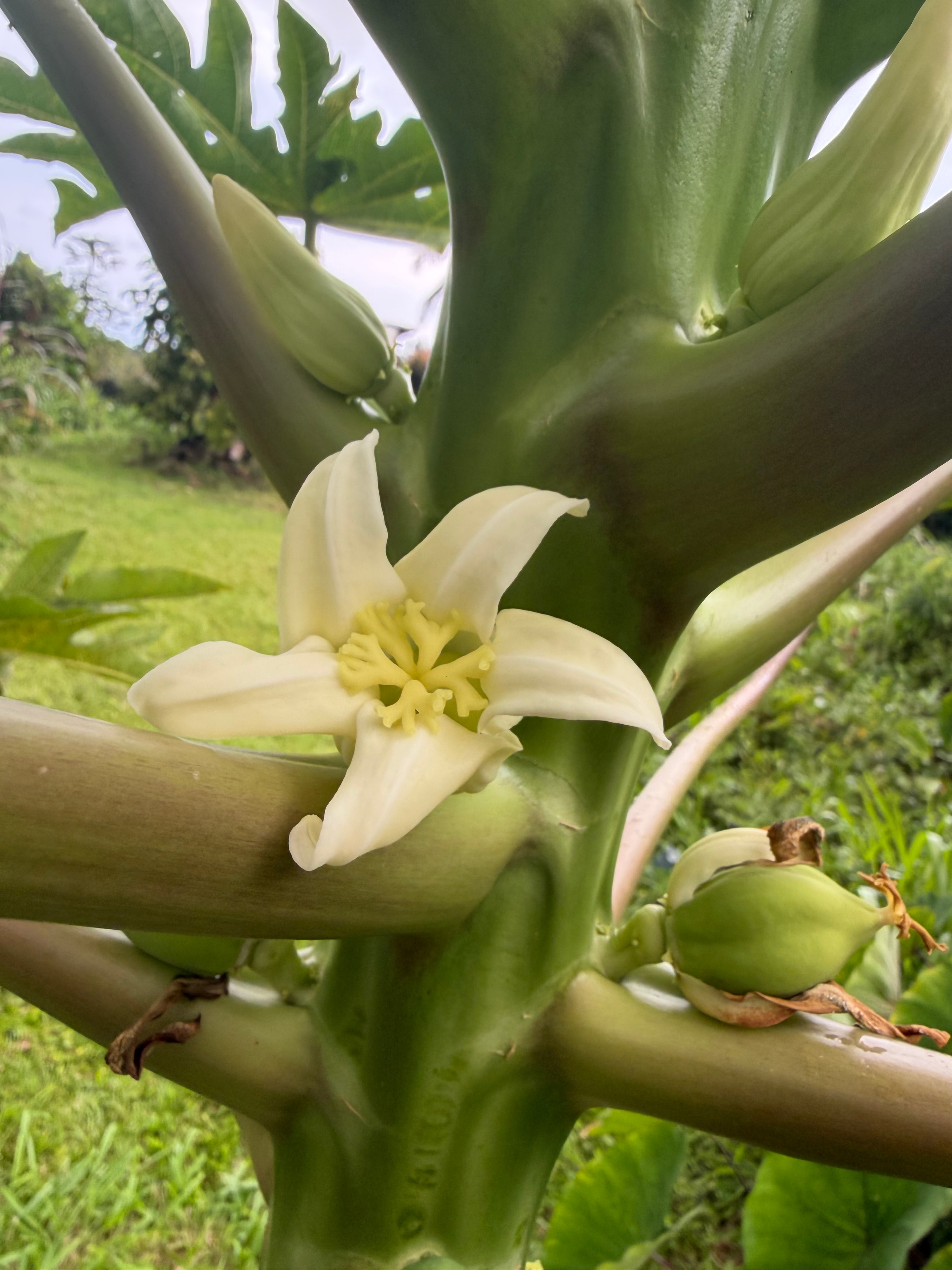
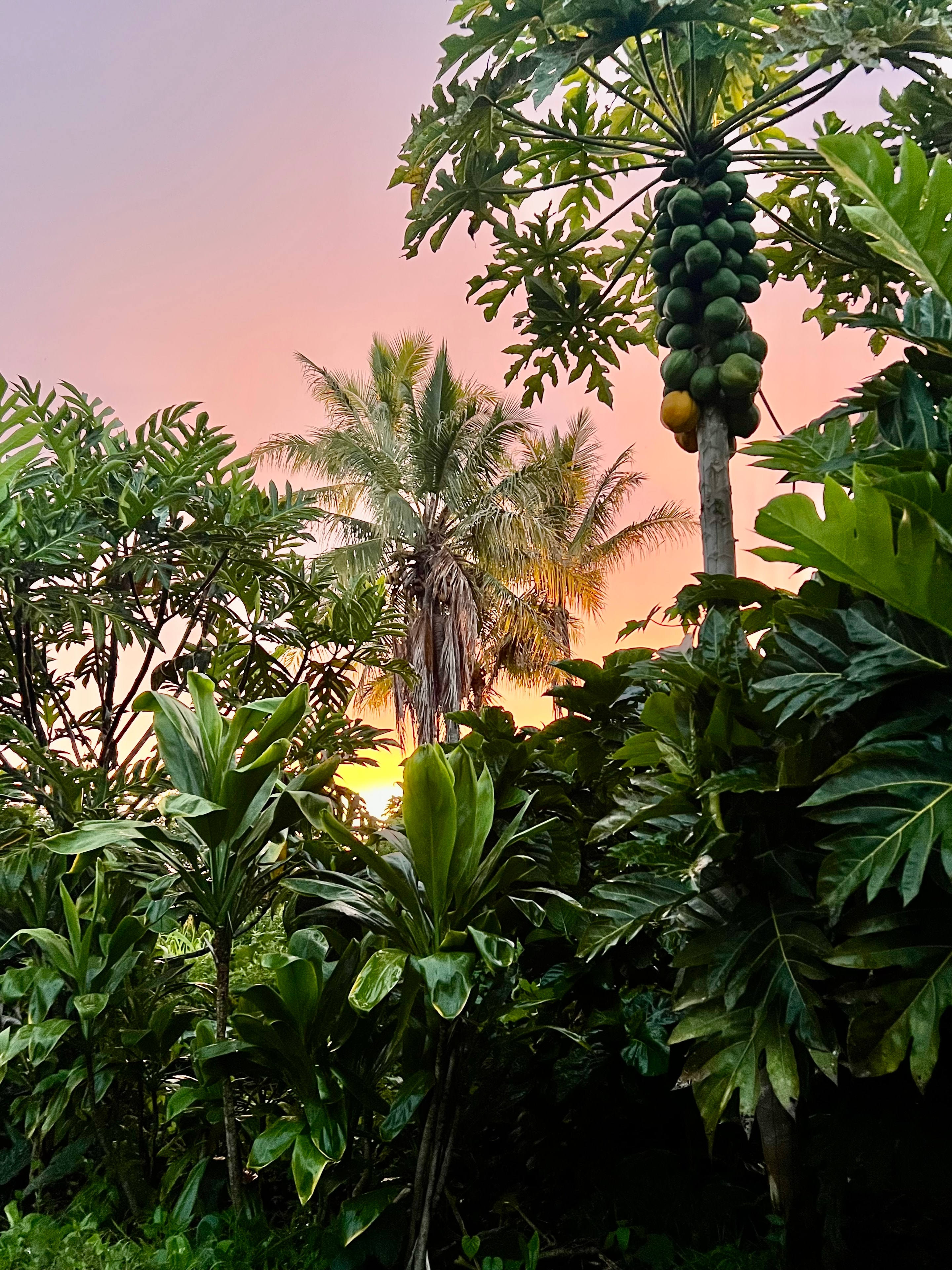
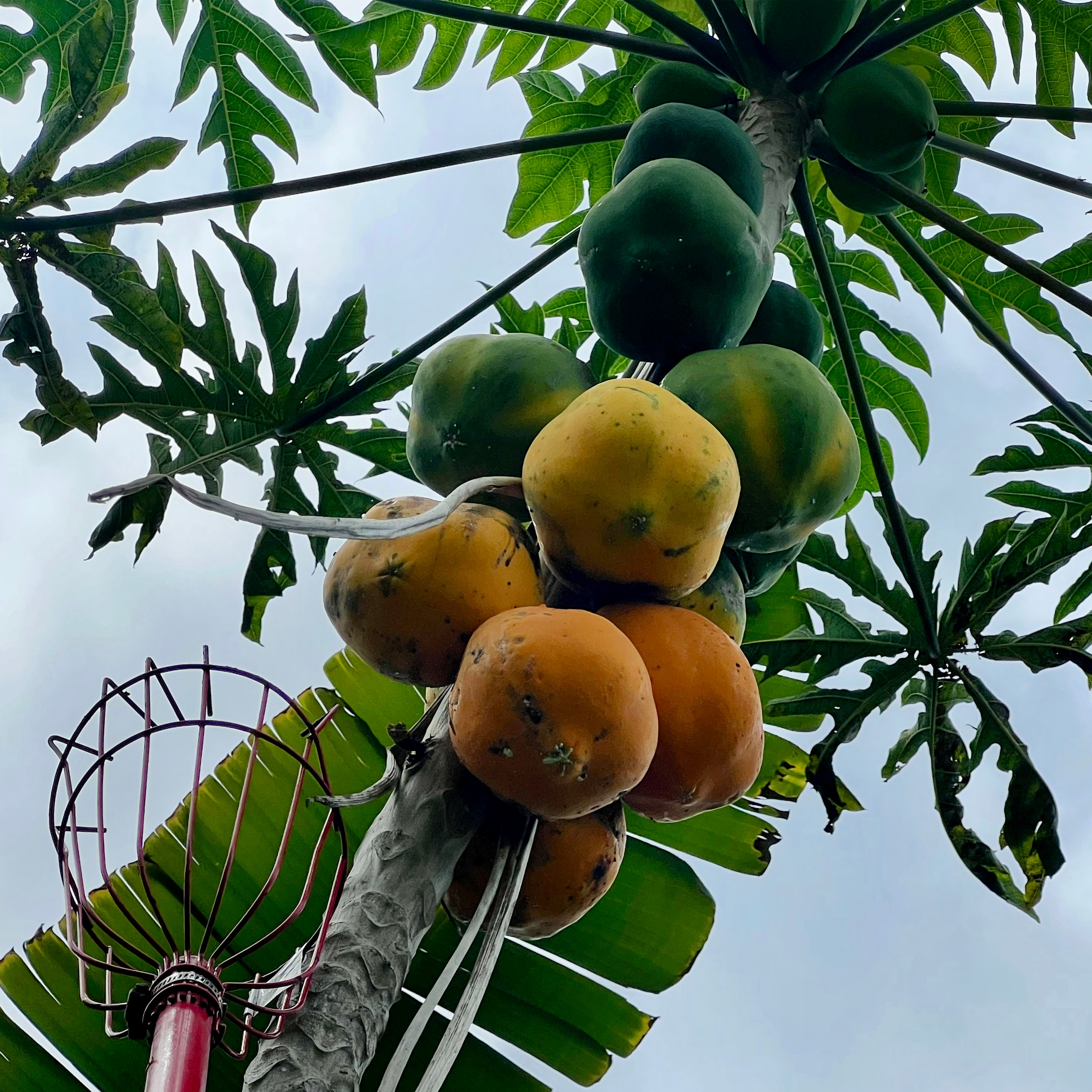
Papaya is known as Mīkana in the Hawaiian language. The wild and naturalized papayas found throughout Hawaii Island belong to the species Carica papaya (family Caricaceae). Sprouting freely from seeds spread by wildlife, these trees thrive independently across the island’s volcanic soils and varied microclimates. The flavor profile of the fruit varies depending on its specific naturalized lineage; yellow-fleshed strains offer a clean, mild sweetness without a heavy musky aftertaste, while red-fleshed variants deliver a deeper, highly concentrated sugar content.
Nutritional Benefits of the Flesh
The fruit serves as an excellent source of essential nutrients, particularly high levels of vitamin C and vitamin A, which support immune function and cellular health. It also contains papain, a naturally occurring proteolytic enzyme that aids in the breakdown of proteins and supports digestive efficiency.
Properties of Whole and Crushed Seeds
The black seeds contained within the fruit are entirely edible and possess a distinct, peppery flavor. Nutritionally, they provide a source of healthy monounsaturated fatty acids and antioxidant polyphenols. When the seeds are crushed, they undergo a chemical reaction that releases bioactive compounds, including caricin and benzyl isothiocyanate. In traditional applications and biochemical studies, these specific compounds are recognized for their strong antibacterial, antimicrobial, and anthelmintic (parasite-fighting) properties.