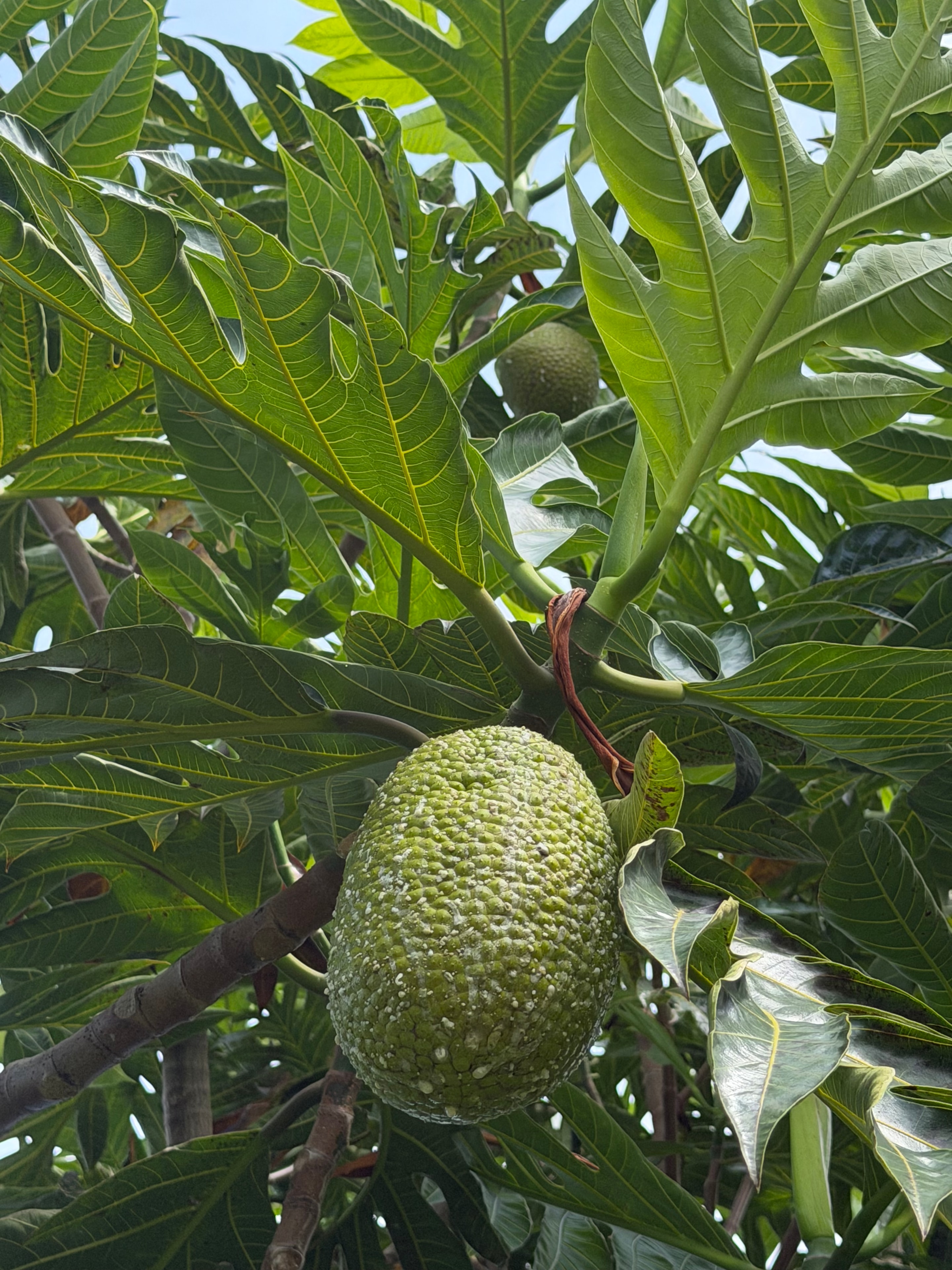
ʻUlu Maoli — Hawaiian Breadfruit
Keauhou-Kona, Hawaiʻi — ʻĀina Pauahi
ʻUlu maoli (Hawaiian breadfruit) grown at the Alohikea-Smith farm in Keauhou-Kona.
ʻUlu Maoli Facts by Breadfruit Institute-NTBG


The Legend of Kū and the ʻUlu Tree: A Story of Sacrifice and Abundance
In Hawaiian mythology, the great god Kū lived disguised as a mortal man, raising a family with his human wife. When a devastating famine struck the islands and his children began to starve, Kū made the ultimate sacrifice to save them. He sank into the earth, and from the soil soaked by his wife's tears, the world's first ʻulu (breadfruit) tree sprouted—a physical manifestation of Kū himself, offering his body as sustenance.
While Kū is famously known in history as Kūkāʻilimoku (Kū, the Snatcher of Land)—the fierce war deity and personal guardian of King Kamehameha I—the legend of the ʻulu tree highlights his vital complementary role as a gentle provider. This profound dual nature is beautifully preserved in Hawaiian tradition: the towering, fierce temple statues (kiʻi) carved to honor Kūkāʻilimoku the warrior were traditionally sculpted directly from the wood of the nurturing ʻulu tree. Today, the breadfruit tree remains an enduring symbol of aloha, resilience, and unconditional love.
