BGHC Posts and Records
Primary source records, genealogical documents, and royal court records from the Board of Genealogy of Hawaiian Chiefs — click any item to view the full record at Archive.org.
Honolulu, Oʻahu
August 26, 2026
Mauna ʻAla I Ka Pono
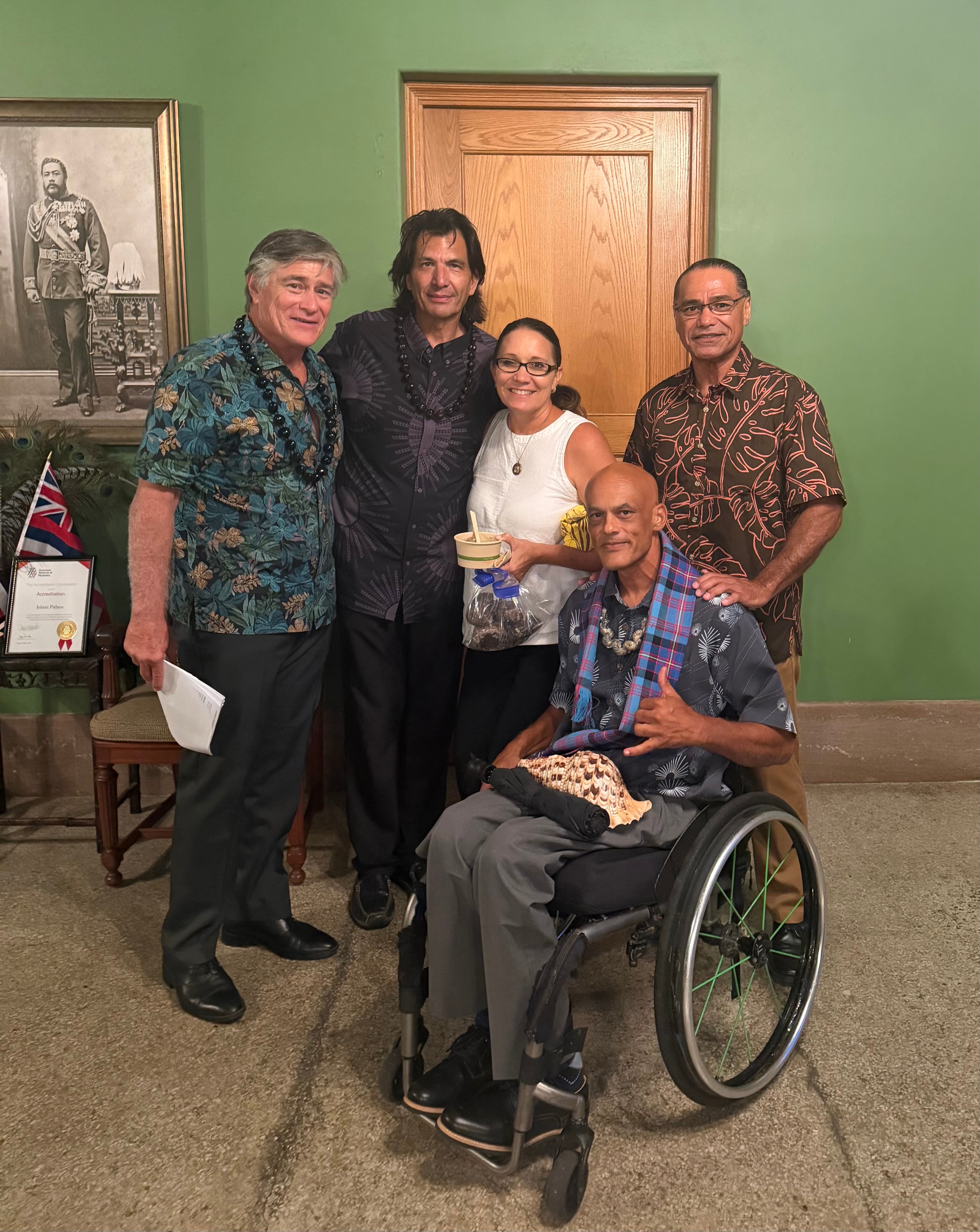
Pictured in Kanaina Bldg. (Left to Right): Aliʻi Quentin Kawananakoa, Kahu James Maioho, Aliʻi Kaheleleni Alohikea-Smith, Kalim H. (Cochran) Smith, Robert Quartero. (Not pictured: ʻohana Laanui)
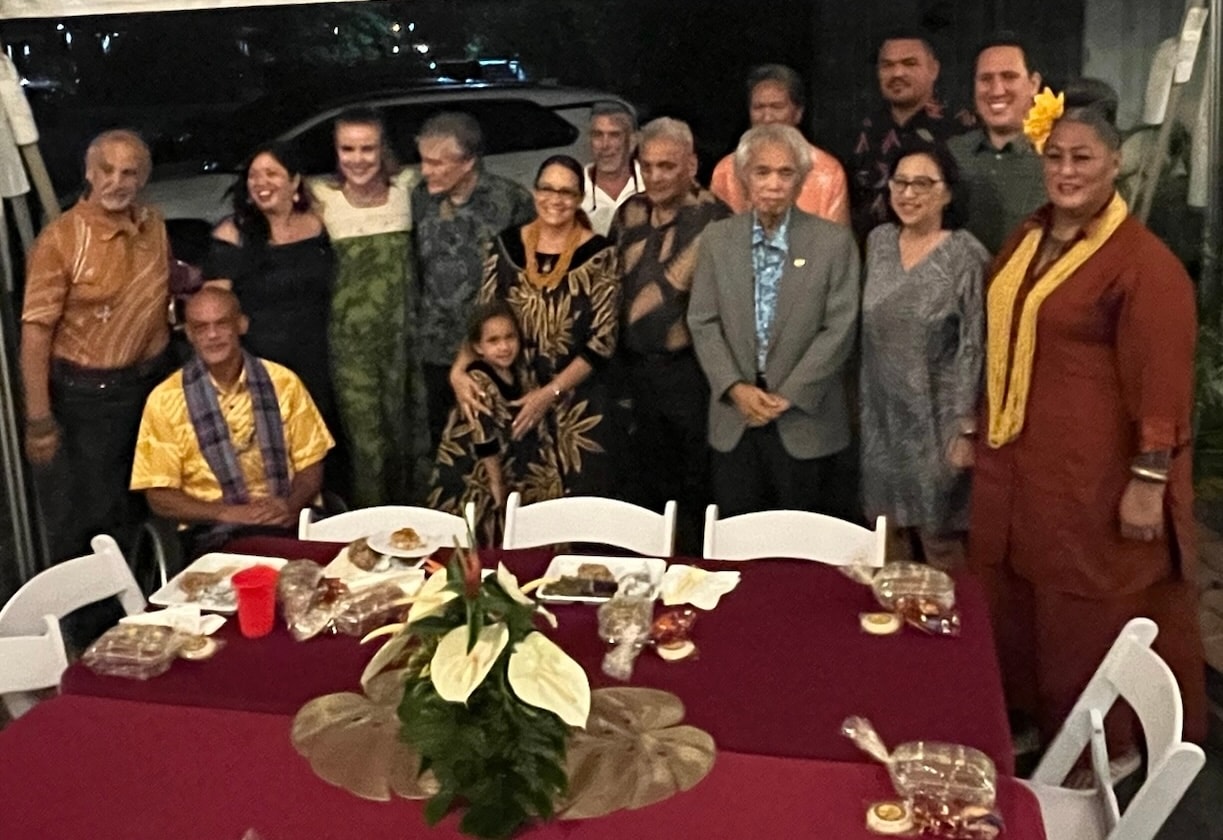
On August 26, 2026, a historic first meeting at the Kanaina Building (ʻIolani Palace grounds) officially established Mauna ʻAla I Ka Pono — a unified council Co-founded by hereditary Kahu of Mauna ʻAla, James Maioho and Aliʻi Quentin Kawananakoa. This sacred gathering of the families of the Chiefs brings together royal lineages and vital community stakeholders to collectively protect Hawaiian heritage and the sanctity of Mauna ʻAla Royal Mausoleum.
Mission & Core Objectives
Following traditional opening protocols at the Pōhukaina Royal Tomb, the council unified under a shared kuleana (responsibility) for Mauna ʻAla Stewardship. Core directives established at this inaugural meeting include:
- Long-term care and administrative policy frameworks for the Royal Mausoleum.
- Traditional protocol oversight rooted in ancestral mandate.
- The absolute protection of iwi kūpuna (ancestral remains).
- Historic solidarity.
Founding Composition of the Council
The historic assembly brought together formal delegations, representatives, and trustees from: nā ʻOhana Aliʻi (Families — Hoolulu, Kawananakoa, Laanui, Alohikea-Smith), The Royal Order of Kamehameha I & Hawaiian Royal Societies, Aliʻi Trusts, The State of Hawaiʻi Department of Land and Natural Resources (DLNR), Hereditary cultural practitioners, lineal descendants, and ʻohana.
#MaunaAlaIKaPono #Mookuauhau #Iwikuamoo #HawaiianKingdom #Pohukaina #PaePaeKapuOLīloa #HouseofKawananakoa #HouseofHoolulu #HouseofUnauna #HouseofKeouanui #Kamehameha #Lunalilo #Kalakaua #KiaiIwiAlakai
Honolulu, Hawaiʻi
March 11, 1933
Alohikea First Citizen of the Garden Island
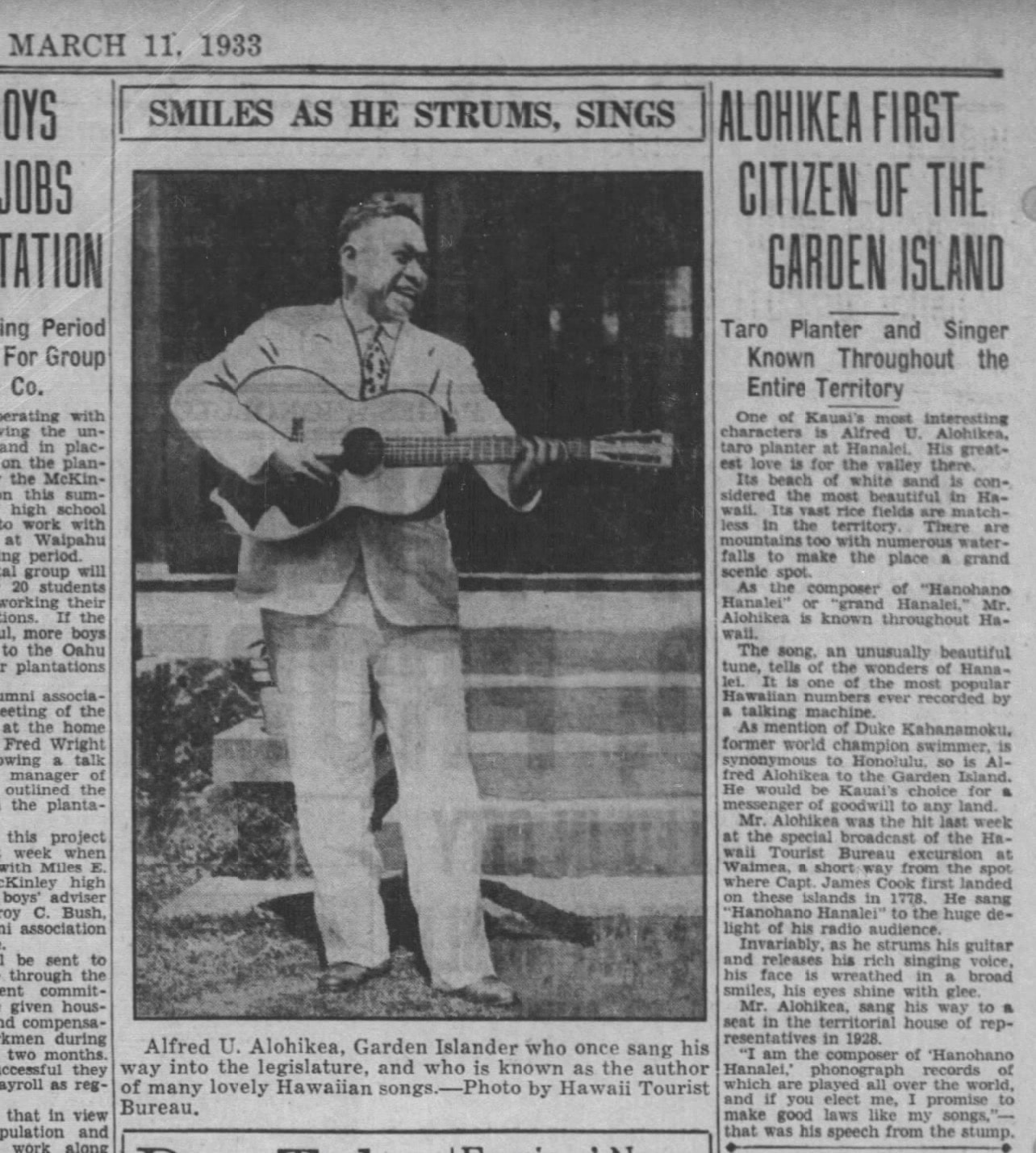
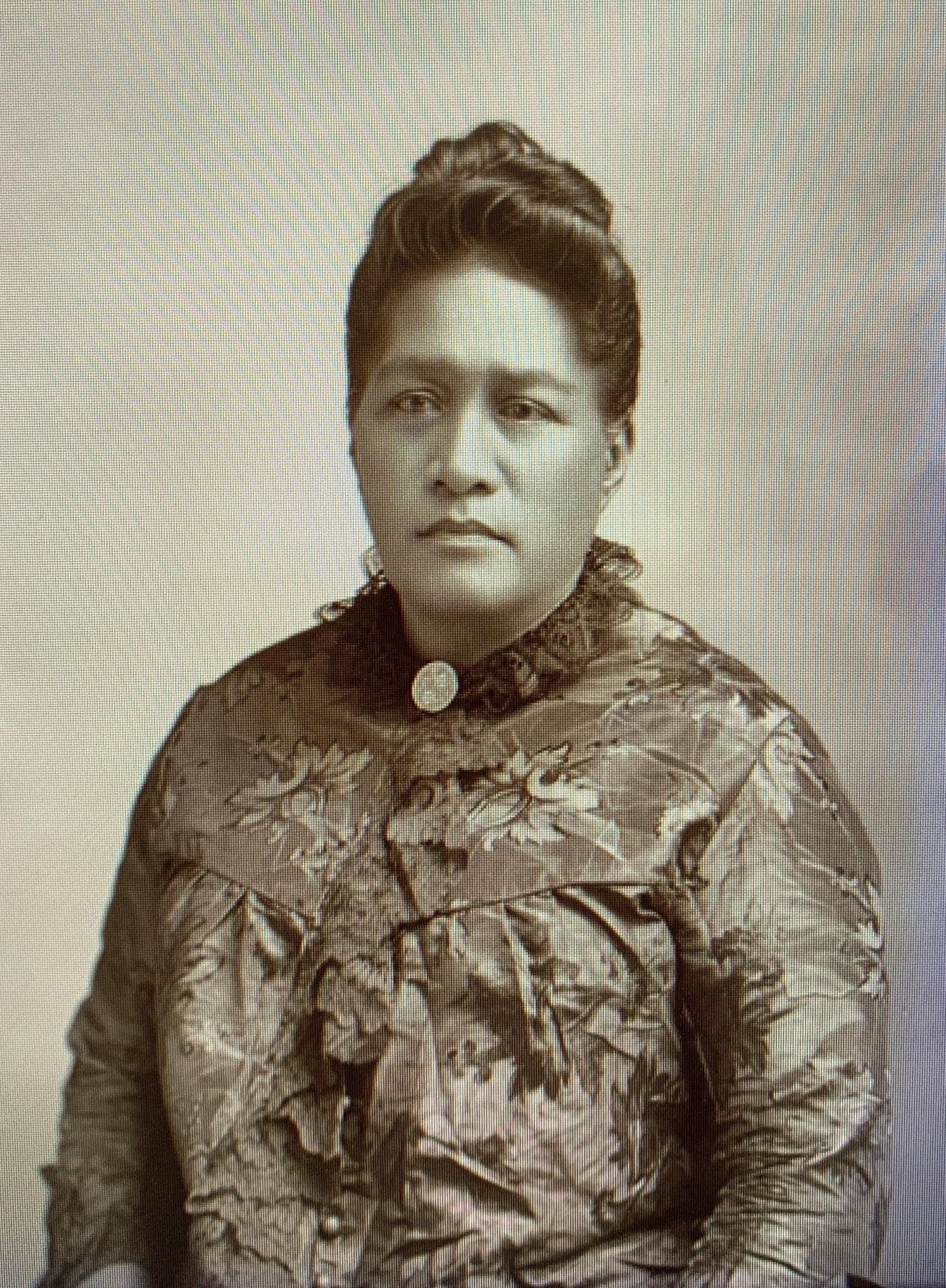
Alfred U. Alohikea, Garden Islander who once sang his way into the legislature, and who is known as the author of many lovely Hawaiian songs. — Photo by Hawaii Tourist Bureau
One of Kauaʻi's most interesting characters is Alfred U. Alohikea, taro planter at Hanalei. His greatest love is for the valley there. Its beach of white sand is considered the most beautiful in Hawaiʻi. Its vast rice fields are matchless in the territory. There are mountains too with numerous waterfalls to make the place a grand scenic spot. As the composer of "Hanohano Hanalei" or "grand Hanalei," Mr. Alohikea is known throughout Hawaiʻi. The song, an unusually beautiful tune, tells of the wonders of Hanalei. It is one of the most popular Hawaiian numbers ever recorded by a talking machine. As mention of Duke Kahanamoku, former world champion swimmer, is synonymous to Honolulu, so is Alfred Alohikea to the Garden Island. He would be Kauaʻi's choice for a messenger of goodwill to any land. Mr. Alohikea was the hit last week at the special broadcast of the Hawaii Tourist Bureau excursion at Waimea, a short way from the spot where Capt. James Cook first landed on these islands in 1778. He sang "Hanohano Hanalei" to the huge delight of his radio audience. Invariably, as he strums his guitar and releases his rich singing voice, his face is wreathed in a broad smile, his eyes shine with glee. Mr. Alohikea sang his way to a seat in the territorial house of representatives in 1928. "I am the composer of 'Hanohano Hanalei,' phonograph records of which are played all over the world, and if you elect me, I promise make good laws like my songs." — that was his speech from the stump
Honolulu Star-Bulletin · Honolulu, Hawaiʻi · March 11, 1933 · Page 2
Board of Genealogy of Hawaiian Chiefs
King Kamehameha III's "Board of Genealogists"
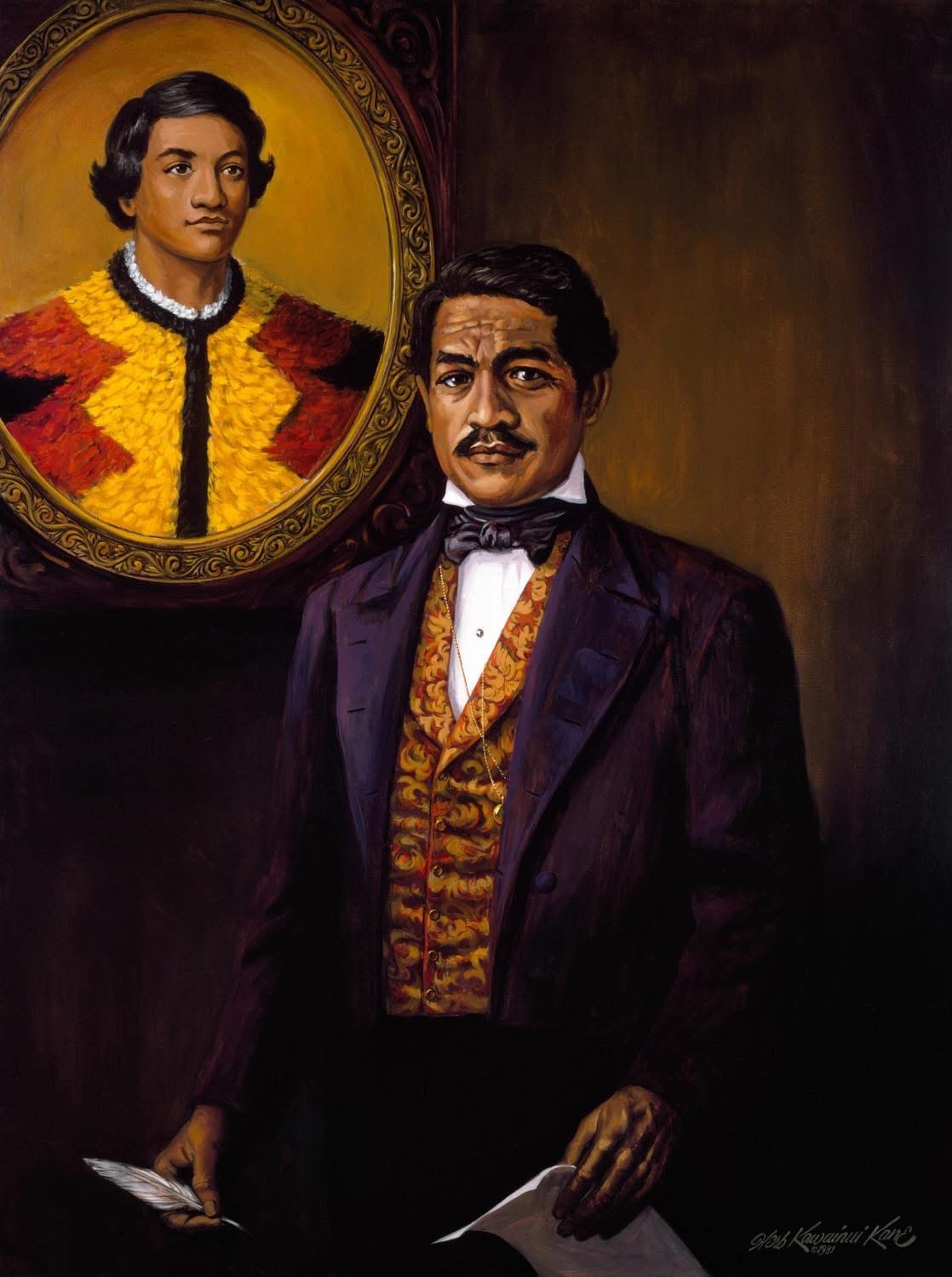
Painting of King Kamehameha III (1814–1854)(r.1825–1854) by Herb Kawainui Kane (1928–2011).
Listed below are King Kamehameha III's "Board of Genealogists" & the Kamehameha Kings they were noted to have advised: 1. Auwae (Kamehameha I, II, III) 2. Kepookulou (Kamehameha II, III) 3. Ahuakui (Kamehameha II, III) 4. Malo (Kamehameha III) 5. Kekauluohi (Kamehameha III) 6. D.Malo (Kamehameha III) 7. Kamokuiki (Kamehameha III) 8. Kaoo (Kamehameha III) 9. A. Unauna (Sr.) (Kamehameha III, IV) 10. Piianaia (Kamehameha III, IV) 11. Queen H. Kalama (Kamehameha III) "Report of the Board to Gulick in English. (see G12.16) -1886?", (Bishop Museum Archives).
#MaiPoina #HawaiianKingdom #Kamehameha #MookuauhauAlii #RulingChiefsofHawaii #Kauikeaouli #uamaukeeaokaainaikapono #papakuauhaualii
Genealogy
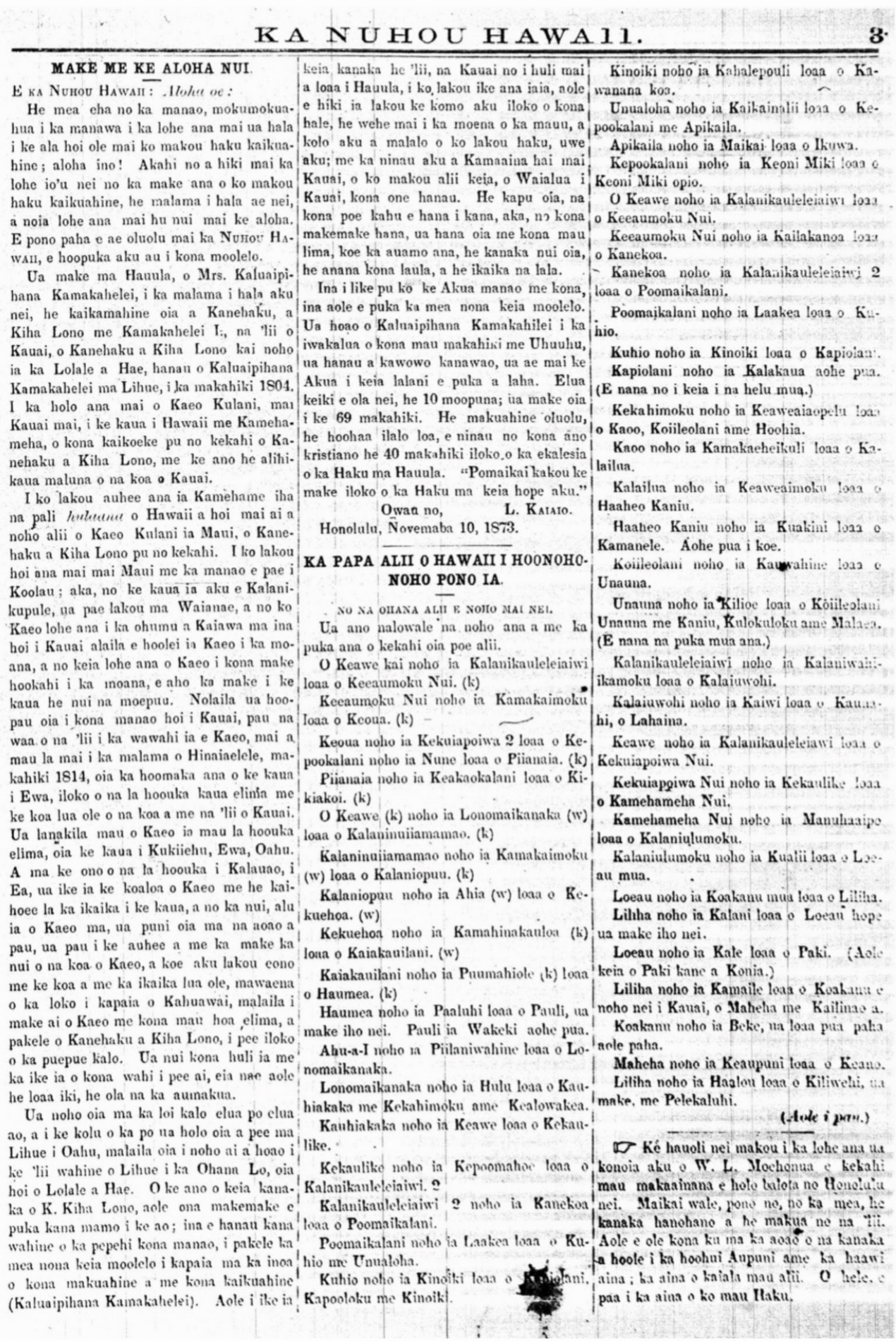
Ka Papa Aliʻi o Hawaiʻi 1874 — Registry of the Chiefs
Primary genealogical register published January 6, 1874 in Ka Nūhou Hawaiʻi (Buke I, Helu 10), documenting the recognized royal lineages of the Hawaiian Kingdom — including Houses of Kawananakoa, Unauna, Kapiolani, and Kuhio — compiled prior to the legislative election of King David Kalākaua.
Royal Records
Poni Mōʻī 1883 — Coronation of King Kalākaua
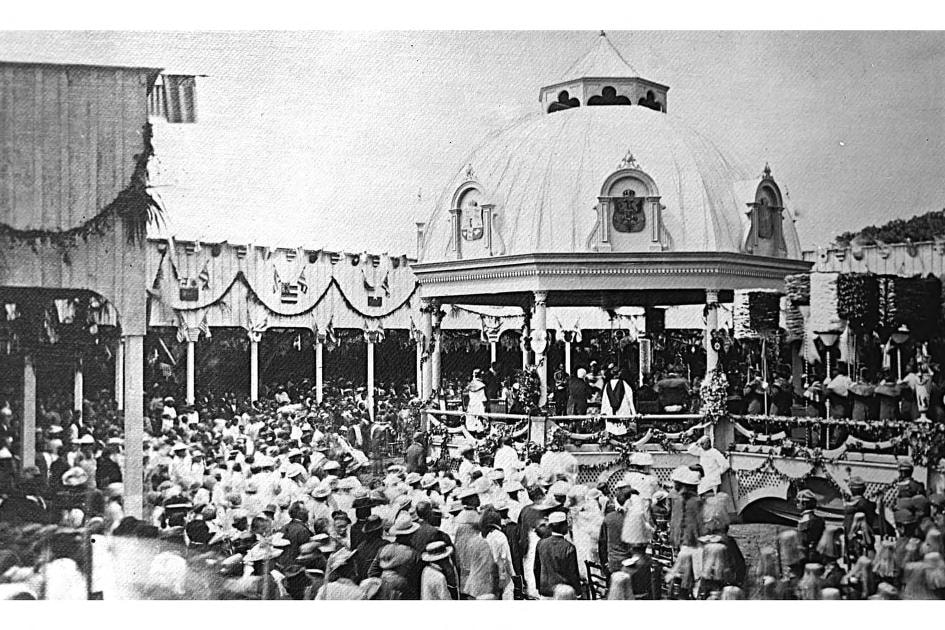
Historical photograph from the 1883 coronation ceremonies of King David Kalākaua at ʻIolani Palace, Honolulu — Hawaii Digital Archives.
Archival Images
Portraits of the Hereditary High Chiefs
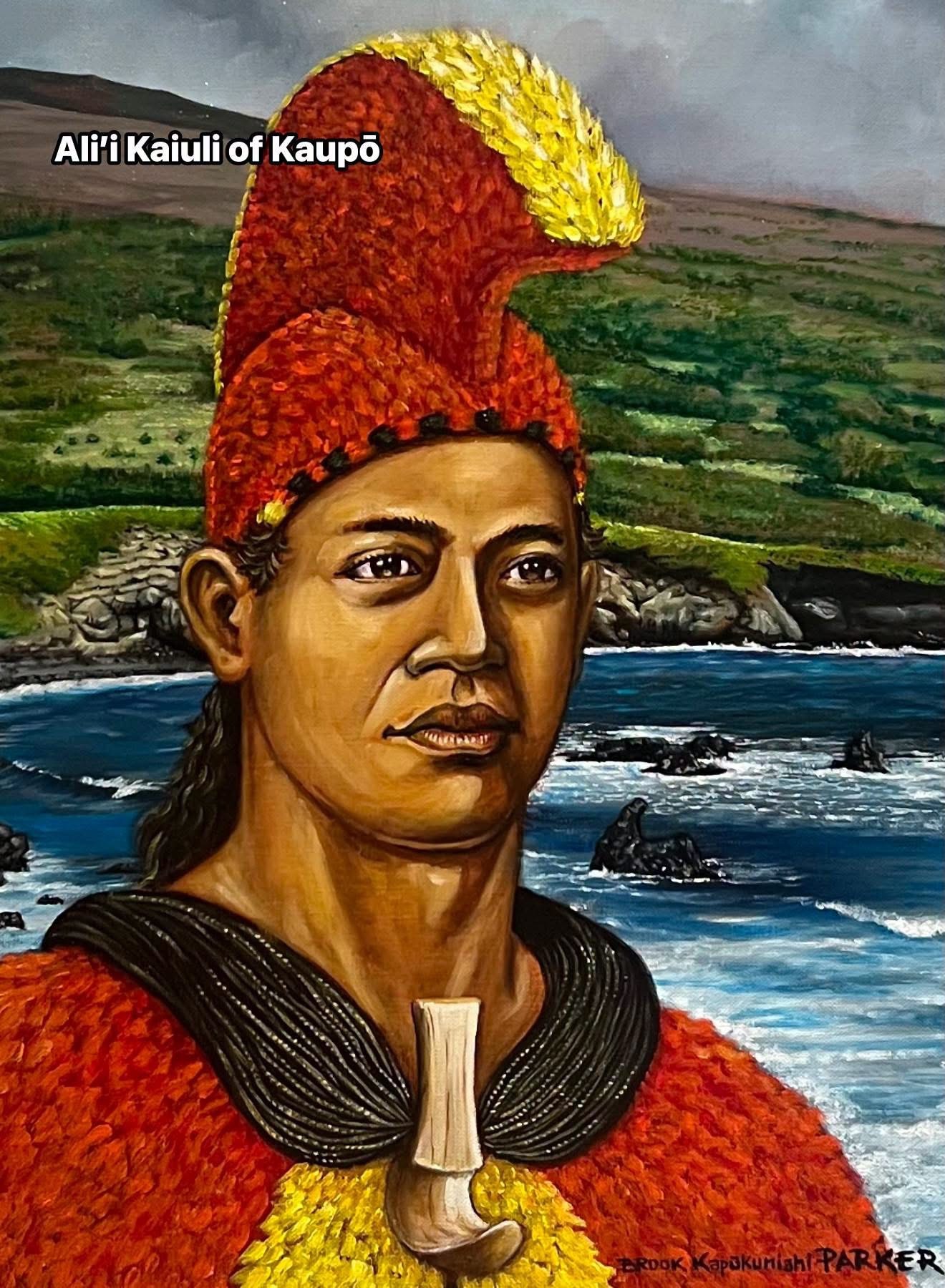
Paintings and portraits of the senior Kapōhaialiʻi line of the royal ʻĪ Family, enrolled by the Board of Genealogy of Hawaiian Chiefs (1880–1887).
Browse the Gallery →
Research Note
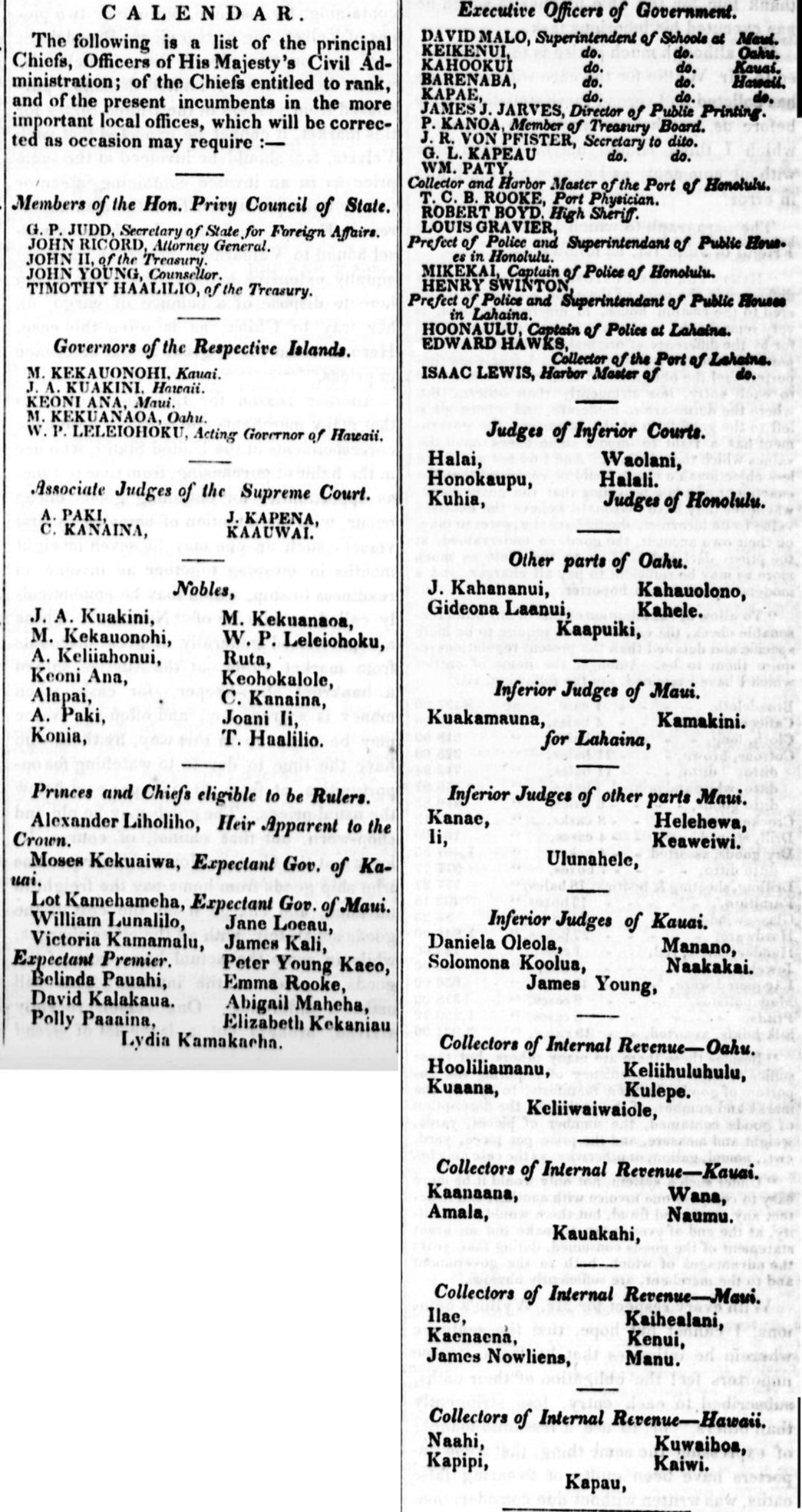
The 1844 Royal Calendar did not permanently lock the pool of valid successors under Article 22. The explicit heading states the list is "which will be corrected as occasion may require:—"
The Monarchy designed this list as an active, modifiable directory — not a permanent constitutional boundary. This built-in flexibility is precisely why King Kalākaua and the Legislature passed Act VII of the 1880 Session Laws, creating the Board of Genealogy to verify living chiefs when the occasion required an update.
Hawaiian Kingdom law required official state vetting and a Legislative ballot. No one held an automatic right to the crown through private claims.
The list was corrected shortly after its publication by the addition of the son of Princess Ruth Keʻelikōlani: John Pitt Kinau (1842–1859).
Key term: "which will be corrected as occasion may require:—" — 1844 Hawaiian Kingdom Government Calendar
Hālau Kaʻeaikahelelani
Watch the hālau perform at the Board of Genealogy of Hawaiian Chiefs gathering.